
ACTIONS
- Protect and safeguard cultural and natural heritage
- Learning and educational opportunities
- Cultural participation/social inclusion
- Sustainable tourism
- Support research
- Employment (recruiting, training, safety)
- Energy consumption, greenhouse gas emissions
- Waste management and reduction
- Transport (forms of, energy use)
- Commercial activities including copyright and IP
- Governance and management
- Security, disaster preparedness, risk reduction
- External partnerships and collaborations
SDGs



- Toolkit/framework/roadmap
- Video
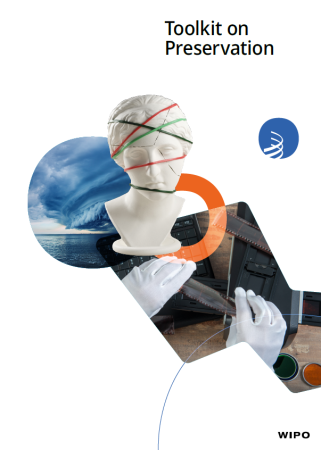
WIPO Toolkit on Preservation for Cultural Heritage Institutions – Libraries, Archives, Museums
Intended Audience
Cultural heritage lawmakers and policymakers, cultural heritage professionals, policy experts, and others advising lawmakers
- R. E. Pantalony, K. D. Crews and D. Sutton, World Intellectual Property Organization (WIPO)
“This toolkit is intended to provide a new WIPO-endorsed resource which will help lawmakers and policymakers in WIPO Member States to consider all relevant issues with respect to preservation copying, and hence to draft more coherent and authoritative legislation. The toolkit is designed to help lawmakers or policymakers develop copyright legislation so that exceptions to copyright can coexist with other mechanisms that allow preservation reproduction.
The toolkit is also meant to be accessible and meaningful to multiple audiences, including cultural heritage professionals, policy experts, and others who will be providing input and advising lawmakers. It describes the rationale and the need for limitations and exceptions for preservation copying, and it surveys a range of factors which legislators, cultural heritage professionals, rightsholders, and others may take into account.” (p.5)
Avaiable in
- English
- Spanish
SDGs LINKAGES
The resource focusses on lawmaking and policymaking in relation to cultural heritage and copyright, which relates to, and can support, the following SDGs: 9.1 (inclusive infrastructure that supports economic development, with a focus on equitable access), 11.4 (strengthen efforts to protect and safeguard cultural and natural heritage), 11.5 (reduce disaster losses), 13.1 (climate adaptation), 13.2 (national laws and policies for climate action), 13.3 (climate education and action), 13.B (climate action in Global South countries), 16.6 (effective, accountable and transparent institutions, 16.10 (a key consideration, on ensuring the right to information and protecting other fundamental freedoms), 16.B (upholding laws and adopting policies for sustainable development), 17.14 (policy coherence for sustainable development) and 17.16 (international partnerships).
The resource can also help to understand the context regarding target 15.6 (fair sharing of benefits from use of genetic resources). The resource can also help support the development of knowledge and attitudes regarding Indigenous rights, appreciation of cultural diversity and of culture’s contribution to sustainable development (4.7).
Click on the SDG Target to discover Our Collections Matter indicators
-
Our Collections Matter indicators:
- Numbers of people in each type of programme drawing on collections from different demographic groups.
- Increases in numbers of people in each type of programme from different demographic groups.
- Proportion of people involved in such programmes in relation to overall audience size.
- Evidence that learners have acquired knowledge and skills to promote sustainable development.
-
Our Collections Matter indicators:
- Development of research-useful collections to support reliable, sustainable and resilient use by researchers and others.
- Number and proportion of collections facilities and stores that support economic development and human well-being.
- Number and proportion of collections facilities and stores that provide affordable and equitable access for all.
- Investment in collections facilities.
- Inclusion of collections information in regional and transborder initiatives, notably via digital access for discoverability.
-

Our Collections Matter indicators:
- Total expenditure (public and private) per capita spent on the preservation, protection and conservation of all cultural and natural heritage, by type of heritage.
- Plans, policies and procedures in place for the safe use of collections for a variety of purposes, protecting and safeguarding both collections and those who use them.
- Plans, policies and procedures in place for the identification, safeguarding and protection of cultural and natural heritage at risk.
- Collecting programmes in place to protect, safeguard and make use of cultural and natural heritage, addressing the needs of communities and stakeholders, and ensuring that collections can be an effective resource for sustainable development.
- Number and diversity of educational, awareness-raising, research programmes, and partnerships that aim to strengthen protection of cultural and natural heritage.
-
Our Collections Matter indicators:
- Collections-based research that supports the understanding and management of disasters of all kinds.
- Plans in place for public education and awareness drawing on collections and collections-based institutions to reduce exposure and vulnerability to disasters of all kinds.
- Plans in place to ensure collections-based institutions steadily work to reduce their contributions to disaster risk, for example by reducing pollution and waste of all kinds.
- Plans in place to ensure collections-based institutions, and people related to them (including workers) are protected from economic losses as a result of disasters.
- Plans in place to provide special support/protection to poor and vulnerable people and groups in and following disasters.
-
Our Collections Matter indicators:
- Plans in place for near and longer term to withstand and actively adapt to climate-related hazards and natural disasters.
-
Our Collections Matter indicators:
- National organisations, institutions and networks relating to collections and collections-based institutions to have integrated climate change measures into policies, strategies and planning relating to collections and collections-based institutions, including funding and other resourcing considerations.
-
Our Collections Matter indicators:
- Plans in place to enhance positive contributions to addressing climate change through use of collections. Plans in place to ensure collections, collections institutions and broader society can adapt effectively to climate change.
- Plans in place for effective education and awareness raising on climate change mitigation, adaptation, impact reduction and early warning.
- Plans in place to reduce negative contributions of collections-related functions, e.g. measuring greenhouse emissions with plans and targets in place to reduce them.
-
Our Collections Matter indicators:
- Number of initiatives (educational, awareness-raising, research, and/or partnerships) drawing on collections and collections-based institutions that build capacity for climate change planning and management in least developed countries and small island developing States.
- Number of targeted initiatives drawing on collections and collections-based institutions aimed at building capacity for women, youth and local and marginalized communities in least developed countries and small island developing States.
-

Our Collections Matter indicators:
- Policies, plans and agreements in place for access and benefit sharing relating to use of collections, in line with the Nagoya Protocol (notably relating to natural history collections, gene banks, tissue banks, seed banks).
- Effective communication and dissemination methods in place to promote access to resources, and access to relevant policies, plans and agreements, in place.
-
Our Collections Matter indicators:
- Proportion of the population [audience/users/non-users] satisfied with their last experience of public services.
- Access to information, and accountability policies and mechanisms, in place.
- Effective institutional arrangements, both for own working and for working in partnership with other sectors, in place.
- Plans and arrangements in place for extraordinary circumstances such as natural and human-caused disasters.
- Effective arrangements in place to fulfil legal and social obligations and responsibilities.
- Effective arrangements in place for transparent communication and reporting of institutional performance.
- Effective arrangements in place for transparent decision-making and accountability.
-
Our Collections Matter indicators:
- Adopt and implement constitutional, statutory and/or policy guarantees for public access to information.
- Plans in place, and plans implemented to enhance public access to information relating to collections.
- Plans in place, and plans implemented to support fundamental freedoms, in line with human rights, national and international agreements and legislation.
- Plans and procedures in place for public access to information relating to the operation and management of collections-based institutions.
- Complaint mechanism in place for public to use where public access to information and fundamental freedoms not supported or fulfilled.
-

Our Collections Matter indicators:
- Proportion of population [audience/users/non-users] reporting having personally felt discriminated against or harassed in the previous 12 months on the basis of a ground of discrimination prohibited under international human rights law.
- Number and proportion of policies that incorporate sustainable development considerations, in the full sense of recognizing all three of social, economic and environmental considerations.
-
Our Collections Matter indicators:
- Proportion of policies that incorporate sustainable development considerations, linking to SDGs and targets.
- Incorporation of policy considerations from outside the collections sector into policies of collections-based institutions, to facilitate partnerships and effectiveness.
-

Our Collections Matter indicators:
- Number and/or increase in number, and diversity of global and international multi-stakeholder partnerships that share collection-related knowledge, expertise, technology and financial resources to address the SDGs, or that otherwise involve collections-based organisations and institutions.
- Number and/or increase in number, and diversity of global and international multi-stakeholder partnerships involving developing countries that share collection-related knowledge, expertise, technology and financial resources to address the SDGs.